Stockholm Astronomy
From August 2025 to December 2025, I studied abroad in Stockholm, which allowed me to collaborate with the Stockholm Astronomical Society to compare our views of astronomy and techniques from different parts of the world.
2025 European Lunar Eclipse
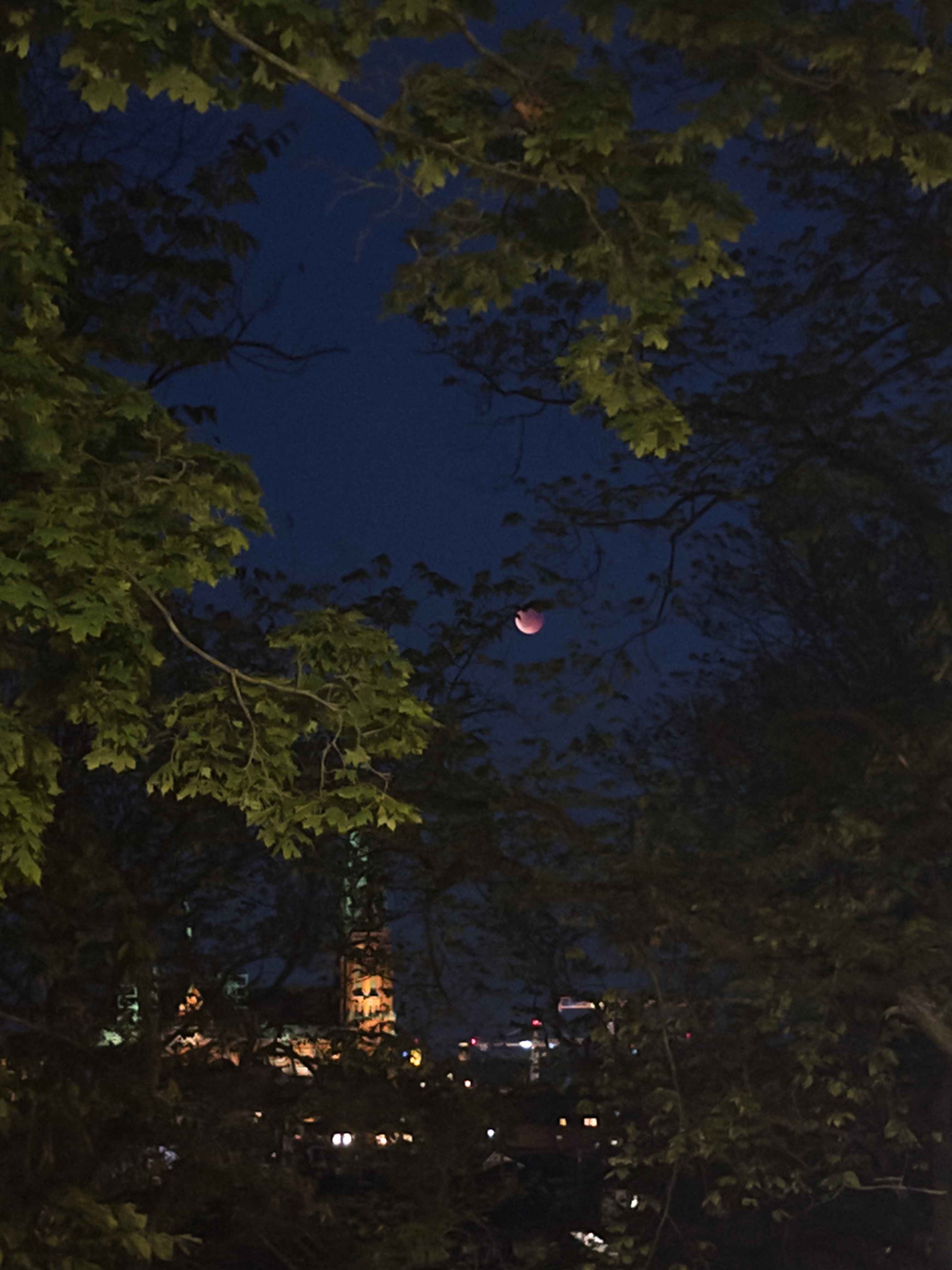
The 2025 total lunar eclipse from Stockholm.
On September 07, 2025 a total lunar eclipse swept across much of Europe. I had just settled into Sweden, though
still spoke nearly no Swedish. Nonetheless, I was eager to explore some of the astronomy scene in Stockholm.
Upon first reading that I had stumbled into the path of a major eclipse, I eagerly sought out astronomy
clubs that were hosting public viewings of the eclipse. I quickly found the Stockholm Astronomical Society, operating
out of the historic Stockholm observatory in the middle of the city, and headed down town.
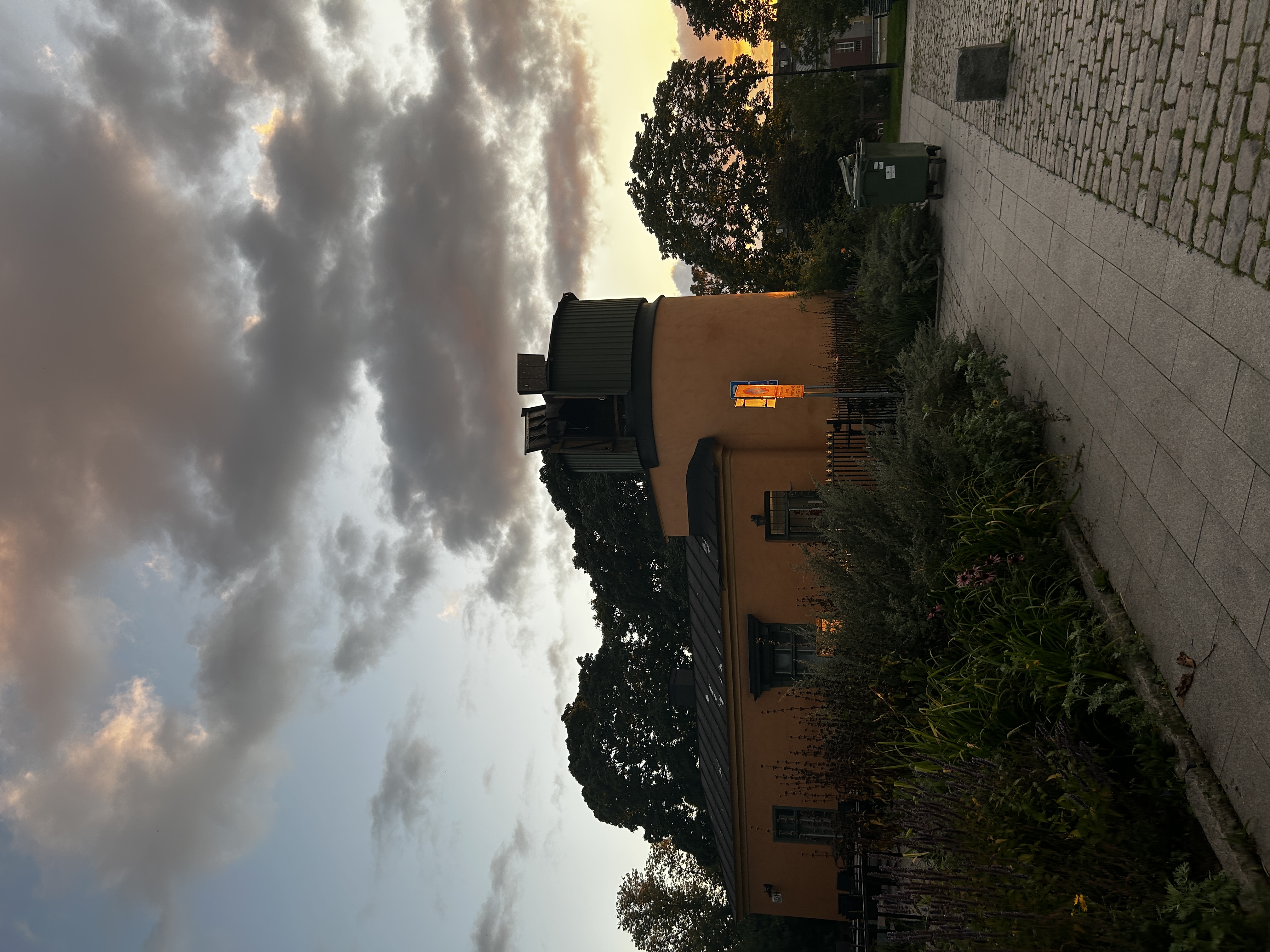
The exterior of the Stockholm Obervatory's small dome.
At the observatory, I realized that I had arrived quite early, and nobody else was there except for one member of the club who would
be helping to run the event. I began chatting with him, and got a bit of a grand tour around the observatory. The small dome has been
converted to house a 12" Celstron telescope. Convieniently, this is the same model as we have been switching to at Carleton, which meant
that I was quite familiar with the system. This was apparently good news, as the astronomy club had been having some troubles getting
everything working. At this point, some members of the Stockholm youth astronomy club has arrived, who joined us in the dome. I was asked
to explain to them how to use the scope, which I though was quite interesting, as I was giving a lesson on using the telescope to the very owners of that scope,
in their own observatory. More than this, I was doing so in English, which I was consistently shocked by the proficiency in. Throughout the
night, I witnessed astronomers from 3 to 93 that were all perfectly content to switch to English at the drop of a hat. Meanwhile, the meager
language I had picked up so far allowed me to at most understand a toddler when he approached the scope and said that he saw "absolut ingenting," queing me
to the fact that I had to shift the telescope back to the moon.
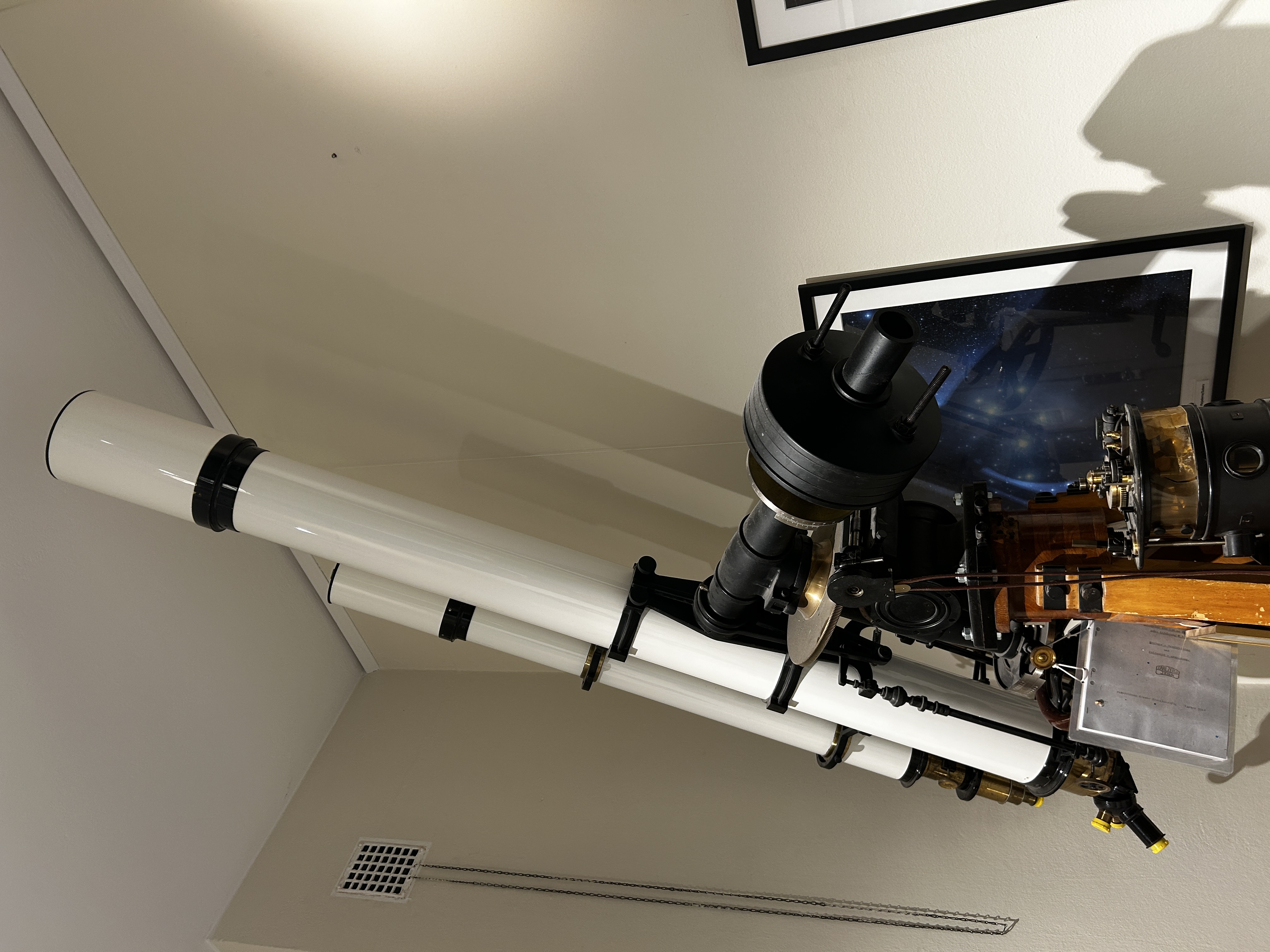
Another telescope in the observatory, housing a mechanical clock drive to counter
the rotation of the Earth
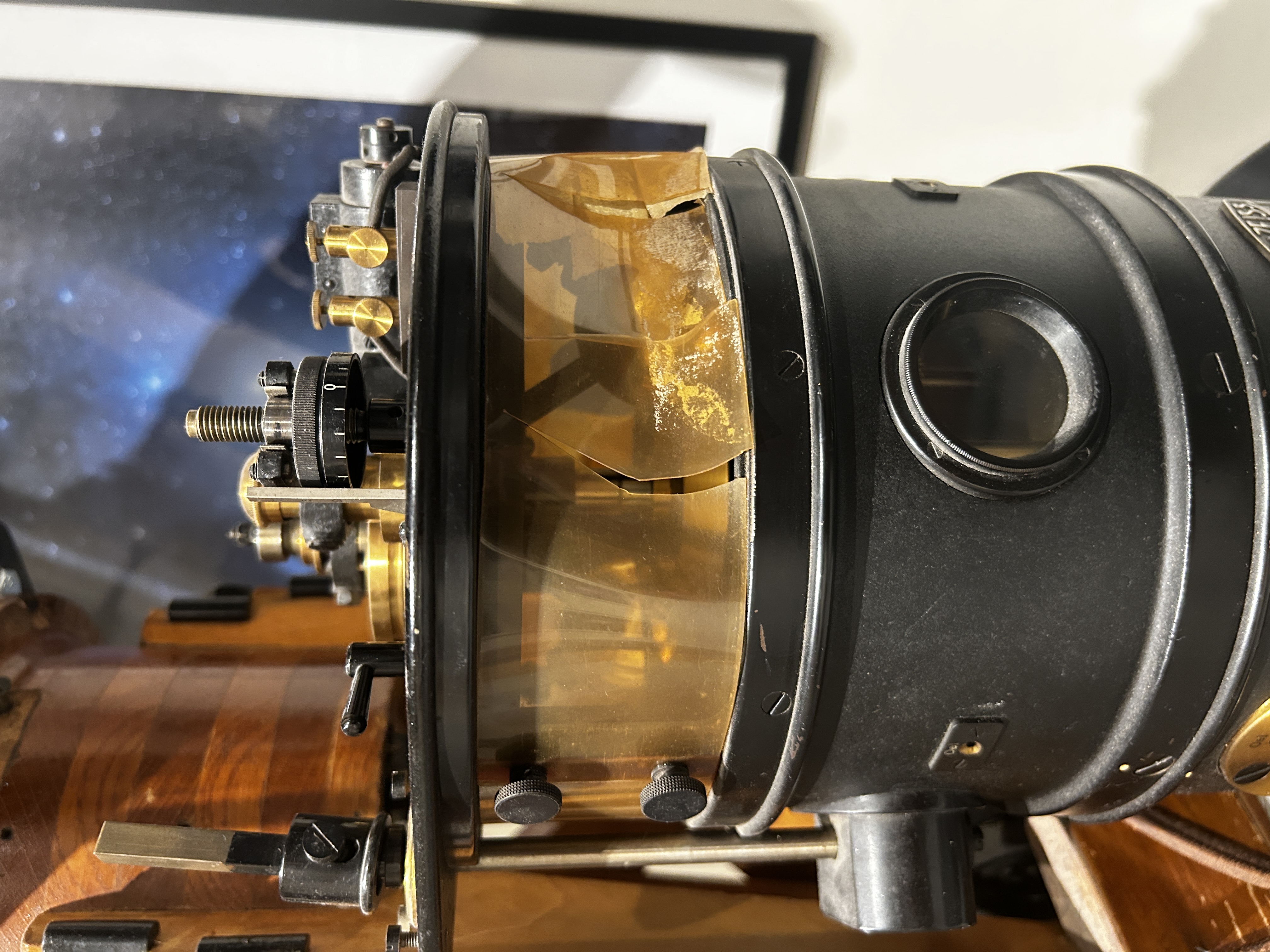
A closeup of the clock drive, the spinning weights are visible through the plastic
After aligning the scope on the lunar eclipse, I stepped outside, only to find dozens more astronomers who had brough their own telescopes
to the event. Among them were locals of all ages, and even a few folks who had traveled from all corners of the world to see the eclipse.
I was able to talk with many people, mostly about their background and opinions on astronomy, and a suprising amount of people were very
involved. From local clubs, to light pollution advocacy groups, to one person I met who had gone back to school in his retirement to get a
masters degree in astronomy. He then taught his local astronomy club everything that he was learning as a way to share the knowledge.
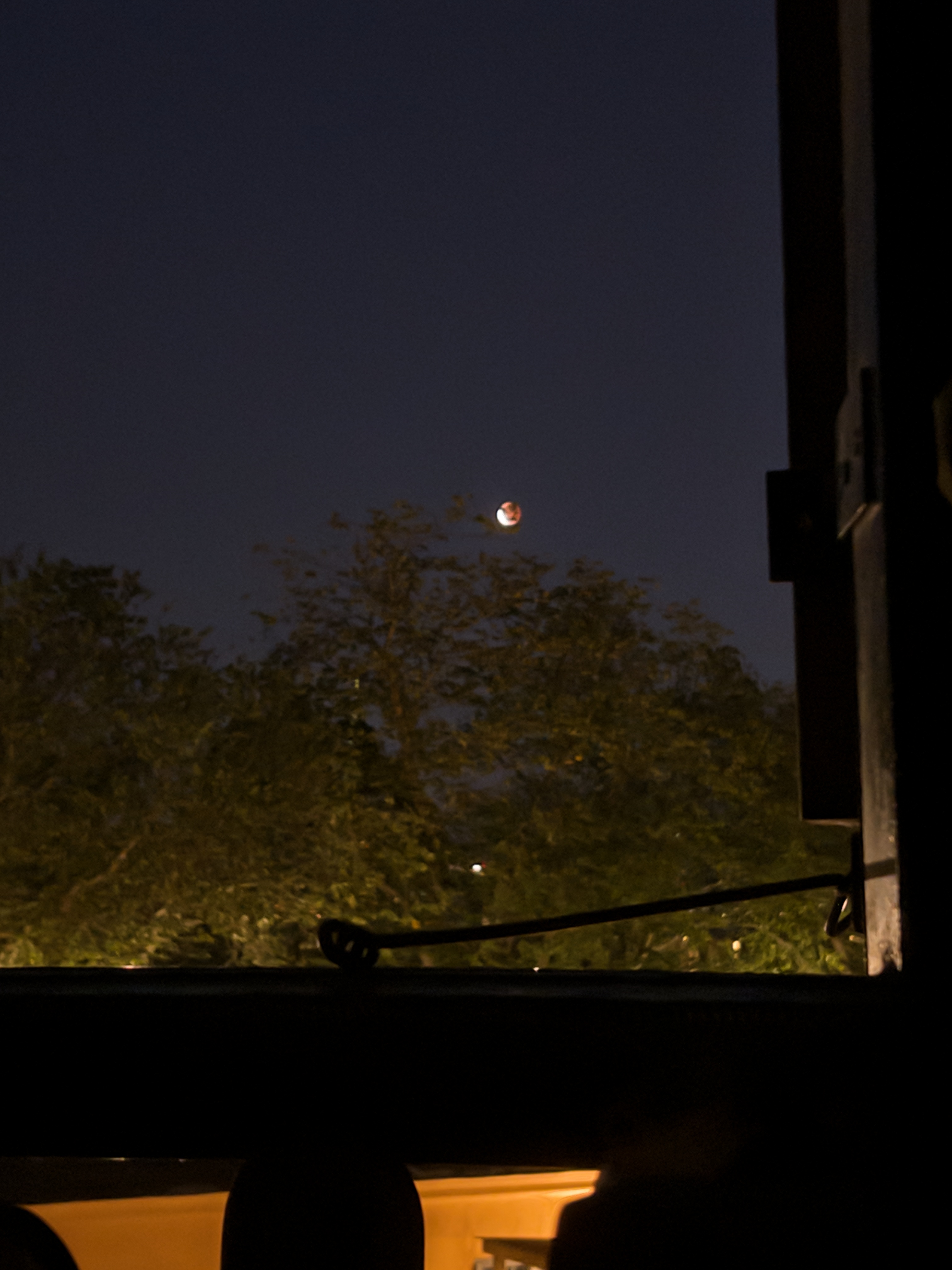
At totality, I again went to the dome.
The eclipse as seen from in the observatory
Through the scope, I thought initially that I would need to re-align the scope on the moon, because I saw nothing. Upon closer inspection,
I learned that the entire content of the eyepiece was actually the same muddy red color because I was observing the moon at totality.
I have seen quite a few astronomical objects, but I think that this was one of my favorites. The focal length of the scope and the size of eyepice
just perfectly extended to the very edges of the moon, so that my entire view was of the moon.
At the end of the night, I talked to the leaders of both the Stockholm astronomy club and the youth club. Though all official communications were
done over an application that required a Sweedish citizenship, I was still informally invited to come back any time for meetings, or to
teach more about the telescope in the observatory.
I did come back at several times throughout my term abroad. By the end of my stay, I was even able to follow a Swedish lecture on astro image processing,
which I consider one of my favorite milestones.
Ultimately, this sort of thing is exactly what I like about astronomy, it has a unique place in science where nearly everybody can get interested in
space, so it is able to bring together people from all sorts of backgrounds. Because everyone sees the sky, it is also incredibly accessible to start
looking at phenomena like eclipses, meteor showers, or hopefully in the next few years, a nova.
Studying Abroad
This entire journey was only possible because of my amazing term abroad in Stockholm through the DIS program, and with support from the Gilman Scholarship.
I would highly recommend for anyone who is able to to study abroad. The perspectives and connections that you can make professionally and personally are immense.
I had an experience where I was working on research in biology imaging methods, and my experience with astro image processing allowed me to completely seamlessly
integrate into the lab. I was also able to take back new tips and tricks for astronomy that I never would have been exposed to if I didn't study abroad.
Particularly in the sciences right now, global collaboration between scientists and between
people in spite of global politics is essential, and seemingly will only become more so in the near future. In astronomy it is easy to get many people from different
backgrounds to come together for a shared event like an eclipse, which only becomes richer for every new perspective or culture that gets added to the discussions.
In other fields where it is not quite so easy to see the collaborations, it is nonetheless as critical as ever to make sure that science remains a global endeavour.
There are also a wealth of resources available to make studying abroad more accessible. The Gilman Scholarship for example, is one such resource that helped me
to make this a reality. I highly encourage any reader considering study abroad to talk to their study abroad office or advisor to see what resources are available,
because it will probably be more than you think.
About Me
I am from St. Paul Minnesota, and I go to school at Carleton College, about 45 minutes from St. Paul. I am a Physics & Astrnomy major, set to graduate in 2027.
There I am president of the astronomy club, active in astronomy research, and an avid folk singer.